

Most people associate diastasis recti with pregnancy and postpartum recovery. However, many men are surprised to learn that they can develop this condition too. Diastasis recti Hayes happens when the muscles running down the front of your abdomen separate, leaving a gap that can affect your core strength, posture, and the shape of your stomach.
For men, the condition often goes unnoticed or is mistaken for stubborn belly fat, poor fitness, or normal ageing. As a result, many continue to struggle with abdominal weakness, lower back pain, and a protruding stomach without understanding the real cause.
At Spire Aesthetics Hayes, we regularly help individuals understand body concerns that may be impacting their confidence and well-being. Spotting the symptoms early can make it easier to find the right treatment and regain confidence in your core.
What Is Diastasis Recti and How Does It Affect Men?
Diastasis recti Hayes is a widening of the left and right rectus abdominis muscles, which run vertically down the front of the abdomen. The two muscles are joined by a strip of connective tissue called the linea alba. Is Surgery the Only Way to Fix Diastasis Recti?
When excessive pressure builds in the abdomen, the tissue connecting the abdominal muscles can stretch and weaken, causing the muscles to pull apart. Although this condition is most commonly linked to pregnancy, men can develop it as well for a variety of reasons.
This can result in:
- A visible bulge along the stomach
- Reduced core strength
- Poor posture
- Lower back pain or discomfort
- Difficulty with certain physical activities
- A stubborn protruding belly, even with regular exercise
Because the symptoms often develop gradually, many men are unaware that they have diastasis recti Hayes until the separation becomes more pronounced.
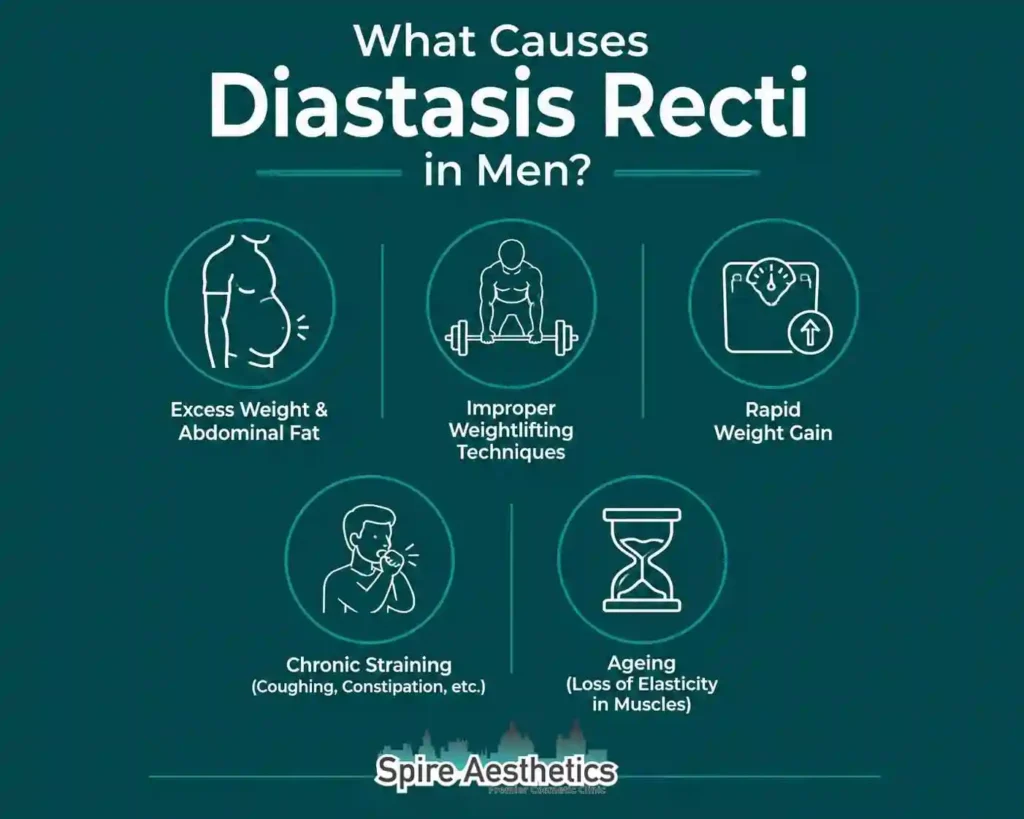
What Causes Diastasis Recti in Men?
Several factors can contribute to abdominal muscle separation in men.
Excess Weight and Abdominal Fat
Carrying extra weight around the stomach puts added pressure on the abdominal muscles. Over time, this pressure can weaken the tissue that holds the muscles together.
Improper Weightlifting Techniques
Heavy weight training can sometimes contribute to diastasis recti, especially if core muscles are not activated correctly. Exercises that place high pressure on the abdomen may gradually weaken the connective tissue between the muscles.
Rapid Weight Gain
Gaining weight quickly can place sudden stress on the abdominal area, making it harder for the connective tissue to cope with the increased pressure.
Chronic Straining
Frequent coughing, constipation, or activities that require repeated straining can contribute to increased abdominal pressure over time.
Ageing
As men get older, connective tissues naturally lose some elasticity and strength, making them more susceptible to separation.
How Can Men Tell If They Have Diastasis Recti?
Many men mistake diastasis recti Hayes for excess fat or poor muscle tone. However, several signs may indicate a deeper issue. See Here: How to Check for Diastasis Recti at Home
Common symptoms include:
- A bulge running down the centre of the abdomen
- A rounded or protruding stomach that remains despite weight loss
- Weakness when performing core exercises
- Lower back pain
- Poor posture
- Difficulty lifting heavy objects
- A feeling of instability in the midsection
One simple self-check involves lying on your back with your knees bent, gently lifting your head, and feeling along the centre of your abdomen. If you notice a gap between the muscles, it may be worth seeking professional assessment.
A trained professional can accurately identify the condition and evaluate the degree of abdominal muscle separation.
Can Diastasis Recti Cause Other Health Problems for Men?
Yes. Diastasis recti can affect both how you look and how your body functions. Your abdominal muscles do much more than help you achieve a toned stomach — they support your spine, keep you stable during movement, and help protect your internal organs.
When these muscles become separated, men may experience:
- Chronic lower back pain
- Reduced athletic performance
- Poor balance and stability
- Increased risk of injury
- Pelvic floor dysfunction
- Difficulty maintaining good posture
In some cases, severe separation may increase the likelihood of developing abdominal hernias, making early intervention particularly important.

Can Exercise Help Men Repair Diastasis Recti?
Targeted exercise can often improve mild to moderate cases of diastasis recti Hayes.
The aim isn’t just to strengthen your abdominal muscles, but to help your core work properly as a whole. Exercises that target the deeper core muscles are often more beneficial than traditional sit-ups or crunches.
Helpful exercises may include:
- Deep core breathing exercises
- Pelvic tilts
- Heel slides
- Modified planks
- Transverse abdominal activation exercises
- Controlled core stability movements
It is important to avoid exercises that create excessive pressure in the abdomen, as these can worsen the separation. Checkout Our Body Sculpting- EMS Toning Pros® Technology for Diastasis Recti
A tailored exercise programme designed by an experienced professional can significantly improve both symptoms and function.
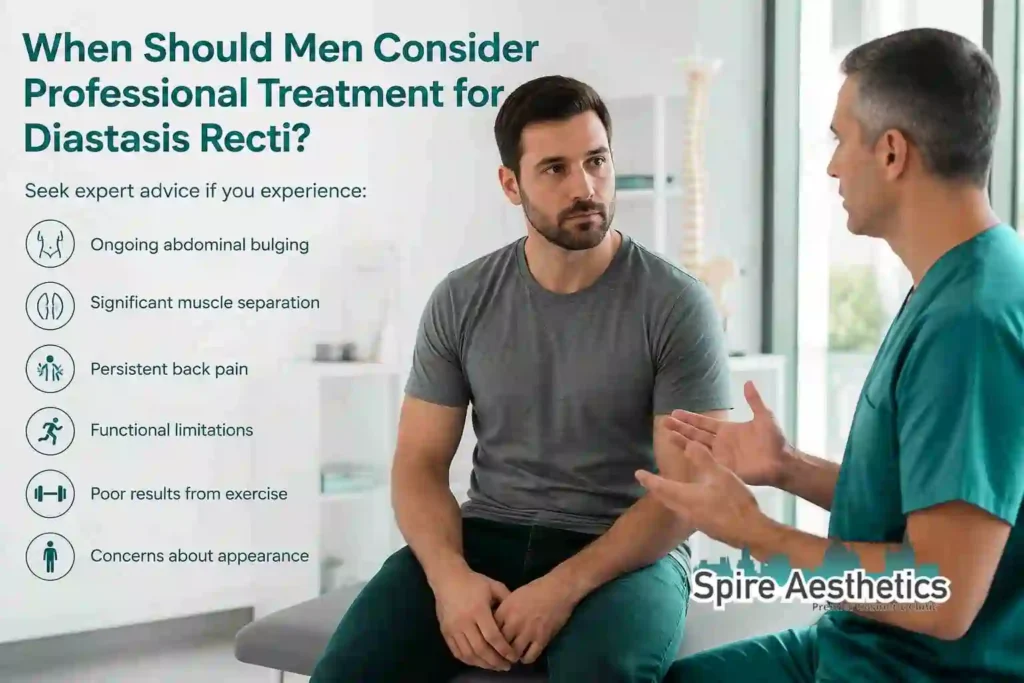
When Should Men Consider Professional Treatment for Diastasis Recti?
If exercise and lifestyle changes are not providing the desired results, professional treatment may be worth considering.
Men should seek expert advice if they experience:
- Ongoing abdominal bulging
- Significant muscle separation
- Persistent back pain
- Functional limitations
- Poor results from exercise programmes
- Concerns about appearance and confidence
At Spire Aesthetics Hayes, we understand how frustrating body concerns can be. We provide personalised assessments and treatment recommendations to help you feel your best again.
A professional assessment can help uncover any underlying issues and ensure you receive the right support.
Why Choose Spire Aesthetics for Expert Guidance and Support?
Living with unexplained abdominal weakness or a persistent protruding stomach can be frustrating, especially when diet and exercise do not seem to help. Understanding whether diastasis recti Hayes is contributing to these concerns can provide valuable clarity and direction.
At Spire Aesthetics Hayes, we follow a patient-centred approach, supporting clients in understanding their options and building personalised treatment plans suited to their needs. Whether you are looking to improve core function, restore confidence, or explore advanced treatment solutions, our experienced team is here to support your journey.
Seeking professional advice early can help prevent symptoms from worsening and put you on the path towards a stronger, healthier core.
Frequently Asked Questions
Q: Can fit and athletic men develop diastasis recti Hayes?
Yes. Even men who exercise regularly can develop diastasis recti, particularly if they perform heavy lifting with poor technique or repeatedly place excessive pressure on their abdominal wall.
Q: Does diastasis recti go away on its own in men?
In moderate cases, it may settle down on its own through targeted core workouts and positive lifestyle changes. But moderate to severe separations generally require professional attention and an organised rehabilitation program for full recovery.
Q: Is diastasis recti the same as a hernia?
No. While diastasis recti Hayes involves the abdominal muscles pulling apart, a hernia develops when tissue or an organ protrudes through a weakened section of the abdominal wall. However, the two conditions can sometimes occur together.
Q: How do I know if I need professional treatment?
If you have made an effort to eat and move well but find yourself gaining the unwanted muffin top, unable to hold your body up as before or continuing with back pain, you might want to get some professional help. A specialist can determine what may be causing your symptoms and lead you to the right remedy.
Q: Can losing weight fix diastasis recti?
Losing weight may help your stomach look flatter and ease pressure on your abdominal wall, but it doesn’t always repair the muscle separation itself.
Q: Are crunches and sit-ups good for diastasis recti?
Not usually. Traditional crunches and sit-ups can increase pressure inside the abdomen and may worsen the separation if performed incorrectly.
For Further Information, Please Call Us 03300100092